Customer retention strategies are the small, repeatable plays that turn one-time buyers into a predictable book of repeat revenue. The math is brutal: acquiring a new customer costs roughly 5–7x more than keeping an existing one, and a 5% lift in retention raises profit between 25% and 95% (Bain & Company). Most small businesses obsess over the funnel and ignore what happens after the sale — here are the 11 plays that change that.
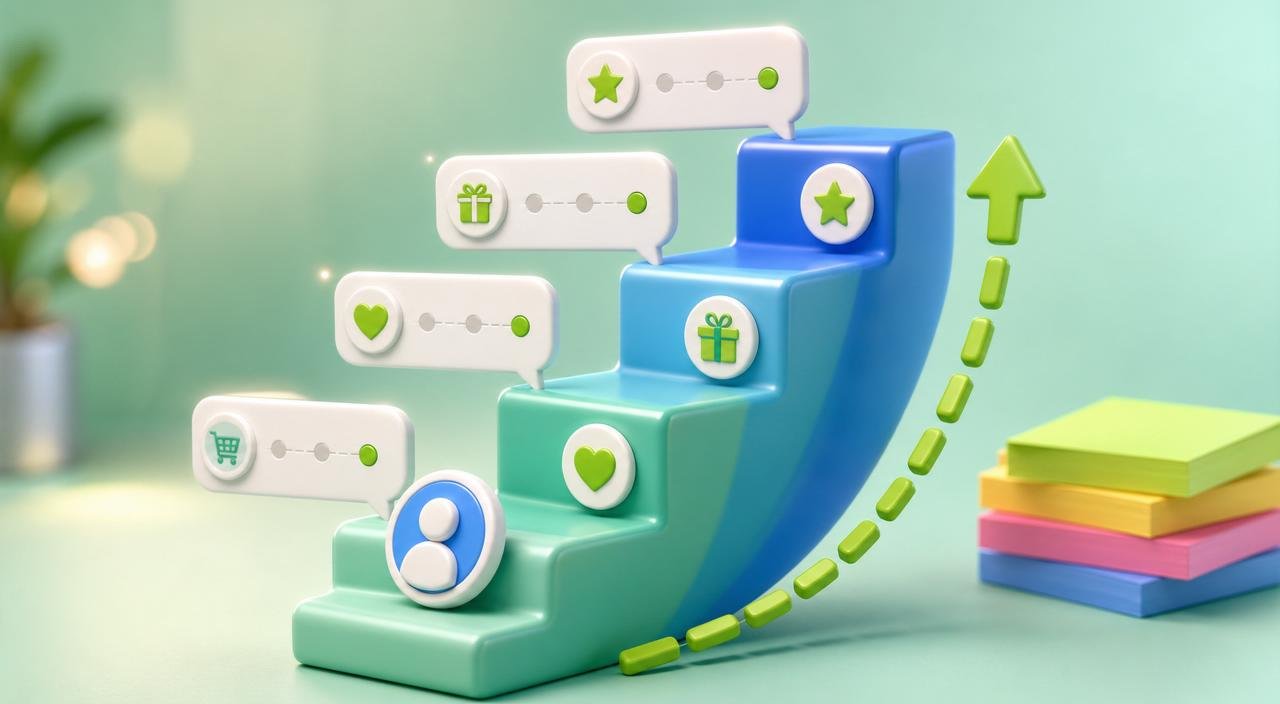
The retention ladder (3 stages, no jargon)
Every play below sits in one of these stages
- Acknowledge — answer faster than the customer expects
- Reinforce — capture the post-purchase win with a review or loyalty moment
- Reactivate — bring lapsed customers back with a low-friction nudge
Most small businesses stop at stage 1. The compounding revenue lives in stages 2 and 3.
Stage 1: Acknowledge (the first 60 minutes)
1. Auto-acknowledge every inbound in under 60 seconds
A templated "we got your message, [owner name] will be back to you within 2 hours" SMS or email is the single cheapest retention lever you own. Customers don't expect an instant full answer — they expect to know they were heard. This one change typically doubles repeat-purchase rates on its own.
2. Reply to every review — positive AND negative — within 24 hours
88% of consumers say they're more likely to use a business that responds to all its reviews (BrightLocal). Responding publicly signals that you care; it also nudges the reviewer toward a second visit. Use the templates in our asking-for-Google-reviews guide and let Reviews AI draft on-brand replies in seconds.
3. Send a 24-hour "how did we do?" check-in
One SMS, two sentences, one yes/no question. If the answer is yes, the next touch is the review ask. If the answer is no, the next touch is a "let me make it right" from the owner — which recovers ~35% of would-be detractors before they post.
Stage 2: Reinforce (the first 14 days)
4. Ask for a review at the peak moment, not later
The "peak-end rule" from behavioral science says memory is anchored at the emotional peak and the very end of an experience. Ask for the review when the customer is happiest — usually 24–72 hours after delivery or service completion. Same-day SMS asks convert at 2–3x the rate of week-later emails (BrightLocal 2026).
5. Capture the moment with a referral hook
Right after the review ask, drop a one-line referral nudge: "Know someone who might need us? Forward this and we'll send you both 10% off." Tying referral to the post-purchase high beats every "refer-a-friend" landing page.
6. Add the customer to a quarterly value-first sequence
Four touches a year — a seasonal tip, a maintenance reminder, a customer spotlight, a community update — keeps you top of mind without selling. Pair it with Social AI so the same content fuels your weekly posting cadence.
Stage 3: Reactivate (the next 12 months)
7. Win back lapsed customers with a 3-touch SMS sequence
Day 30, day 60, day 90 after their last interaction. Touch 1 is value ("here's a tip"). Touch 2 is a soft ask ("want us back?"). Touch 3 is an offer ("save 15% if you book this week"). Win-back sequences typically recover 2–5% of lapsed customers — and the lead cost is zero.
8. Run a "we miss you" segment four times a year
Pull every customer who hasn't bought in 90+ days and send one quarterly nudge. The same list will fatigue if you message monthly; quarterly cadence keeps response rates above 8%.
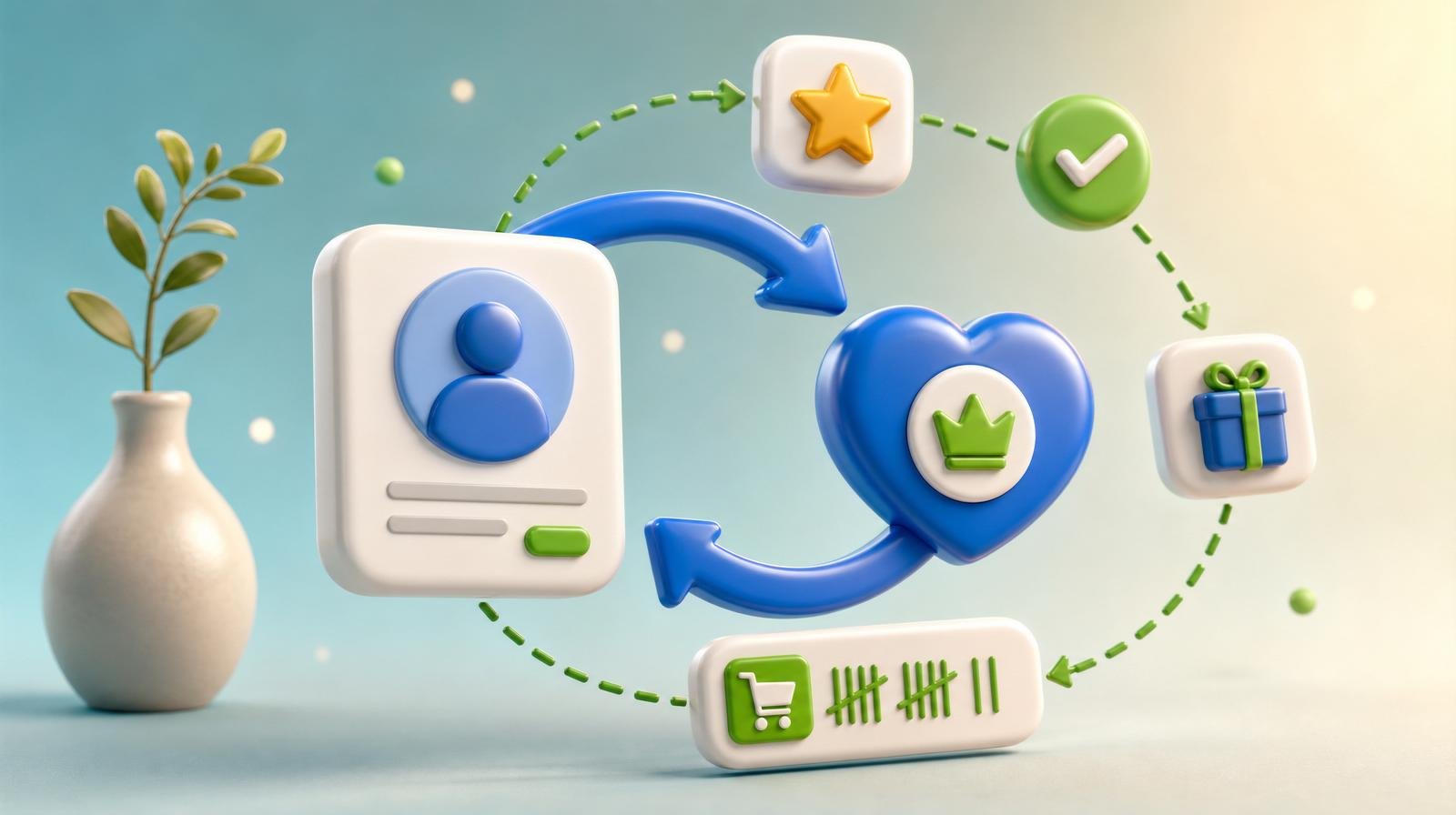
9. Build a tiny loyalty mechanic, not a points program
Forget the 12-tier rewards system. The simplest, most effective loyalty mechanic for a small business is "every 5 visits, the 6th is free" or "your birthday month gets a surprise." Low engineering effort, high emotional payoff.
Stage 4 (bonus): Listen for churn signals before they leave
10. Watch review velocity as your early-warning system
A drop in review velocity is the most reliable leading indicator of churn most small businesses ignore. Aim for 5+ new reviews a month — fewer than that for two months in a row usually predicts a 15–25% retention dip 90 days out. Reviews AI automates the ask cadence so velocity doesn't slip.
11. Track repeat-revenue share as your north-star metric
Most small businesses obsess over total revenue; the ones that compound watch repeat-revenue share — the percentage of monthly sales coming from returning customers. Healthy small businesses sit above 40%. Below 25% is a screaming retention problem.
The 4 retention mistakes that quietly burn small businesses
- Treating retention as "loyalty programs." Points are a feature, not a strategy. Fix speed-to-reply and post-purchase first; loyalty rewards are the cherry on top, not the cake.
- Only emailing when you have something to sell. The customer's inbox learns to ignore you. The fix is one value-first touch for every two promotional touches.
- Asking for the review a week later. Peak- end research is clear: the best window is 24–72 hours. By week two, conversion drops by half.
- No win-back system. 60% of lapsed customers would buy again if asked once. Most small businesses never ask, because no one is running the list.
What to set up this week
Three plays, in this order, will deliver 80% of the result:
- Wire a 60-second auto-acknowledgement on every form, missed call, and DM.
- Turn on a 24-hour post-purchase SMS that asks "how did we do?" and routes happy answers to the Google review link.
- Schedule a quarterly win-back SMS to every customer who hasn't bought in 90+ days.
Want the whole retention engine running on autopilot? Pair Reviews AI with the playbook in our small business automation guide and stack it on top of the 11 lead-gen levers so every new customer enters a retention loop the moment they buy. Start a free account on the ClickGrow signup page or compare plans on the pricing page.