
Small business branding is the consistent voice, look, and promise your business uses everywhere a customer meets you — not just your logo. Done well, it's the cheapest growth lever you have. Done inconsistently, it quietly leaks every dollar you spend on marketing. Below is the 10-step framework to lock in a real brand in a weekend, with zero designer required.
Branding vs. marketing vs. logo design (clear it up first)
Most small business owners use these three words like they're the same thing. They're not, and getting them mixed up is why a $1,200 logo never moved the needle.
- Branding is the strategy: who you serve, what you stand for, how you sound, what you look like, and the promise you keep. It's a document, not a deliverable.
- Logo and visual identity are the surface layer of branding — the wordmark, color palette, typography, and photo style. Important, but second.
- Marketing is what you do with the brand once it exists — ads, posts, emails, reviews. Marketing without branding is just noise that costs more every year.
The 10-step small business branding framework
Do these in order — strategy first, design second
- Pick one tight customer (the wedge)
- Write the one-sentence promise
- Choose 3 brand attributes
- Define voice and tone rules
- Build the visual identity (palette, font pair, logo)
- Lock in the photography and image style
- Write the elevator pitch and tagline
- Document everything in a 1-page brand sheet
- Roll it out to every touchpoint
- Hand the brand to AI so it stays consistent
Steps 1–4 are strategy. Steps 5–7 are design. Steps 8–10 are operations — that's where most brands fall apart.
Step 1: Pick one tight customer (the wedge)
"Small business owners" isn't a customer. "Solo plumbers in Austin doing $200K–$500K in revenue who hate paperwork" is. The tighter your wedge, the easier every other step gets — you write to one human, not a focus group. Pick the customer you'd clone if you could. Everything in steps 2–10 gets built for them.
Step 2: Write the one-sentence promise
One sentence: we help [tight customer] do [valuable thing] without [the painful part]. Examples:
- "We help solo HVAC techs book more weekday jobs without spending on Google Ads."
- "We help boutique studios fill yoga classes without posting daily on Instagram."
- "We help local bakeries sell out by 11 a.m. without discounting."
This sentence is your North Star. Pin it above your desk. Every social post, ad, and review reply should sound like it comes from the business that says that sentence.
Step 3: Choose 3 brand attributes
Pick exactly three adjectives your brand will be known for. Three is enough to be memorable; five is too vague to enforce. Mix one functional, one emotional, and one unexpected:
- Functional: fast, reliable, transparent, hands-on, local, no-fluff, expert
- Emotional: warm, calm, witty, bold, friendly, no-BS, quietly confident
- Unexpected: nerdy, irreverent, vintage, scrappy, cinematic, unfussy, slightly weird
Three attributes = your filter for every word and image you ever publish.
Step 4: Define voice and tone rules
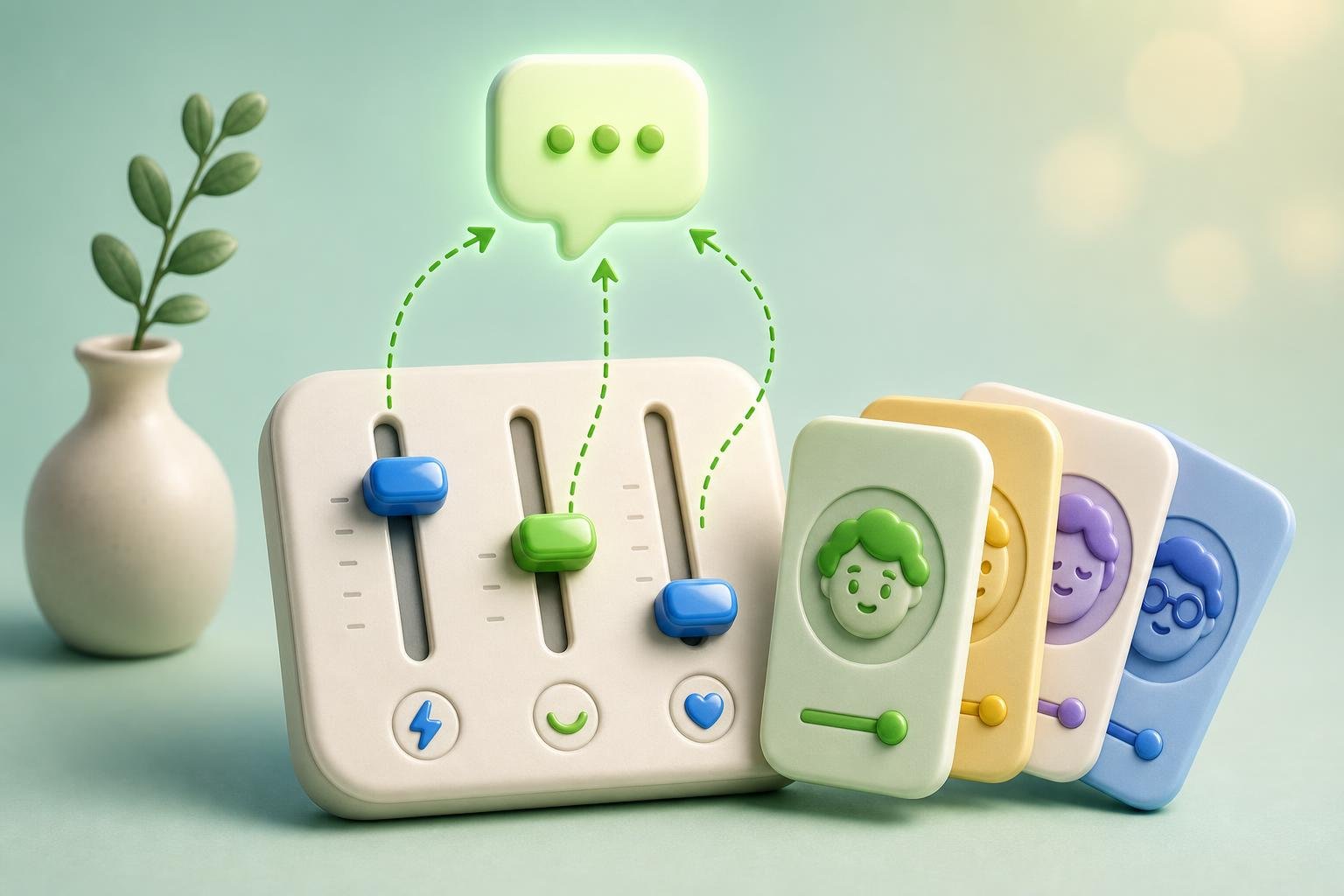
Voice is who you are (fixed). Tone is how you sound right now (shifts with context). Document a 5-line voice sheet: a sample line, a banned word list, a "we say / we don't say" pair, your emoji rule, and your punctuation rule. Steal an archetype from the 8 brand voice examples guide if you're starting from a blank page — most small businesses can pick one and customize 20% rather than invent from scratch.
Step 5: Build the visual identity (palette, fonts, logomark)
Now — and only now — you touch design. Three rules:
- Palette: 1 primary, 1 accent, 2 neutrals. Don't pick more than 4 colors. Coolors.co generates a free palette in 30 seconds.
- Fonts: 1 display + 1 body, both free on Google Fonts. Pair a personality font (display) with a neutral one (body) — never two display fonts.
- Logomark: a wordmark in a clean typeface beats a custom icon for 90% of small businesses. Looka, Canva, or a $200 freelancer is plenty — don't spend $5K here.
Step 6: Lock in the photography and image style
Pick one of three: real photo, illustration, or 3D render — and stick to it. Mixing all three is the #1 thing that makes small business feeds look amateur. Set a single preset (Lightroom, Canva, or your phone's filter), one cropping rule, and one rule about people on camera (always / sometimes / never). Done.
Step 7: Write the elevator pitch and tagline
Two assets, both built from your one-sentence promise:
- Elevator pitch (15–30 seconds): what you do, who you do it for, what's different, and what to do next. This is the script for your About page hero.
- Tagline (3–7 words): a sticky version of the promise. "Marketing on autopilot." "Sales tax done in 5 minutes." "The HVAC CRM that books itself." Short. Said out loud. No buzzwords.
Step 8: Document everything in a 1-page brand sheet
One page, in a Google Doc, that contains: customer wedge, promise, 3 attributes, voice rules, banned words, palette hex codes, font names, logo lockups, photo style, elevator pitch, and tagline. Anyone you ever hire (VA, designer, ad agency, AI tool) gets this doc on day one. This is the single highest-ROI document in your business.
Step 9: Roll it out to every touchpoint
A brand only exists where customers meet you. Apply the sheet to:
- Website hero, About page, footer
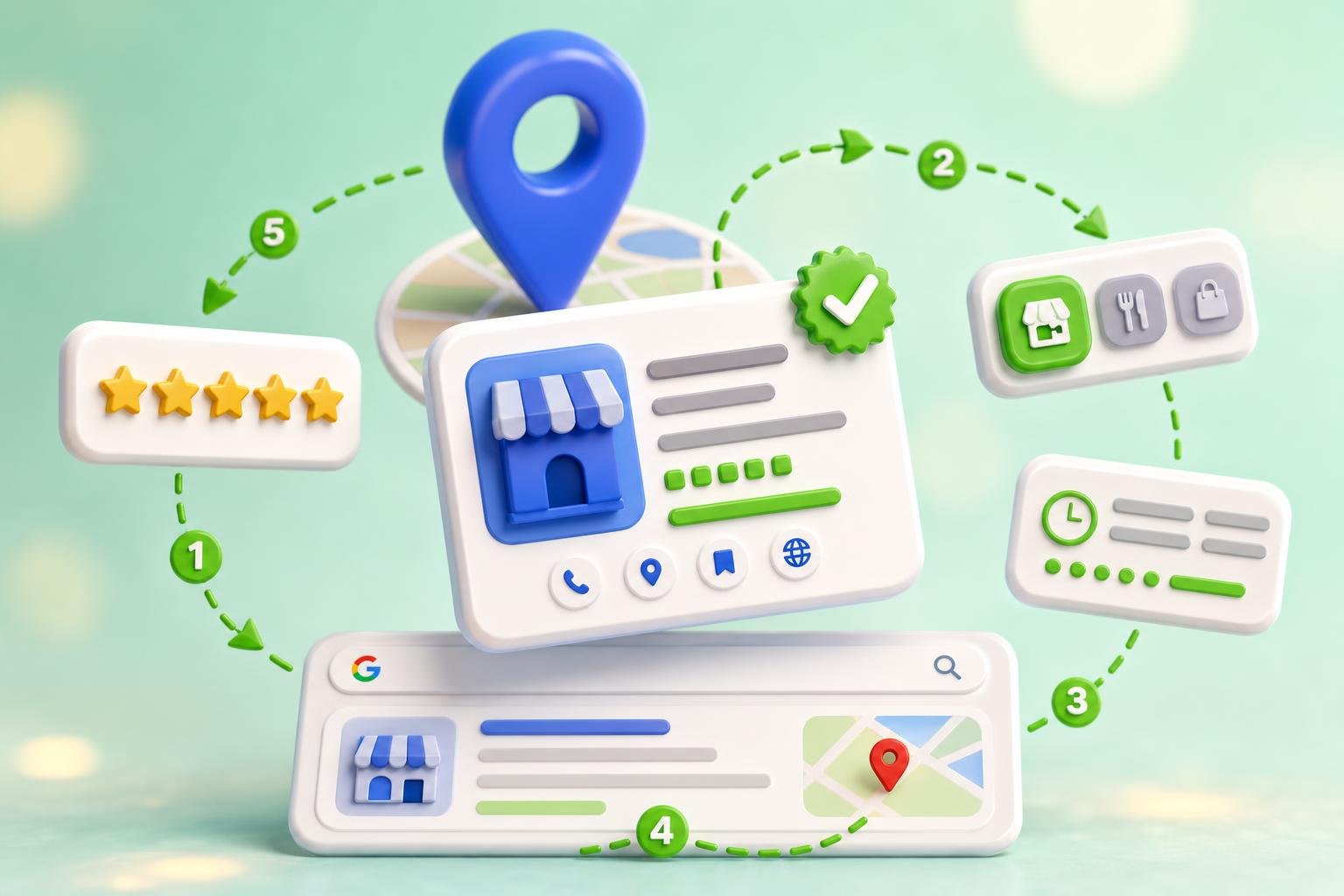
- Google Business Profile description, photos, and posts — full setup in our GBP optimization playbook
- Social profiles (bio, header image, pinned post)
- Email signature, invoice template, packaging, voicemail
- Review reply templates and review request copy
- Ad creative and landing pages
Audit one touchpoint a day for two weeks — that's the whole rollout.
Step 10: Hand the brand to AI so it stays consistent
This is where most small businesses leak. You build a beautiful brand, then write 60 captions on a phone in line at the airport, and three of them sound like a different company. Fix it once: feed your brand sheet (or your website) into an AI that holds it for every future post and reply.
ClickGrow's Brand Intelligence reads your website and builds a brand profile that powers every social post, review response, and listing — so your voice stays the same whether you're writing it or it's 11 p.m. and an AI is. Pair it with Social AI for posts and Reviews AI for replies, and the brand keeps itself consistent without you babysitting every line.
The 5 small business branding mistakes to avoid
- Logo-first thinking. A great logo on a fuzzy promise is a $1,200 sticker on a problem.
- Trying to sound like a Fortune 500. Your edge is being the human option. Don't write "synergize" — write the way you'd talk to your favorite customer.
- Rebrand-itis. Refreshing the look every 18 months instead of being consistent for 5 years. Boring consistency beats clever change.
- No documentation. A brand you can't hand to someone else doesn't exist.
- Channel drift. Sounding warm on the website and corporate on Instagram. Pick a voice and run it everywhere.
What to do this weekend
You don't need a designer or a budget to start. In a single weekend you can: pick the customer wedge, write the promise, choose 3 attributes, write the voice rules, and pick a palette + font pair. That's a real brand. Everything else is polish — and most polish only matters once the strategy is nailed.
Once it's documented, the fastest way to keep it consistent across every channel is to give it to an AI trained on your brand that drafts your posts, replies, and listings in your voice — and let your social marketing run on the rails you just built.